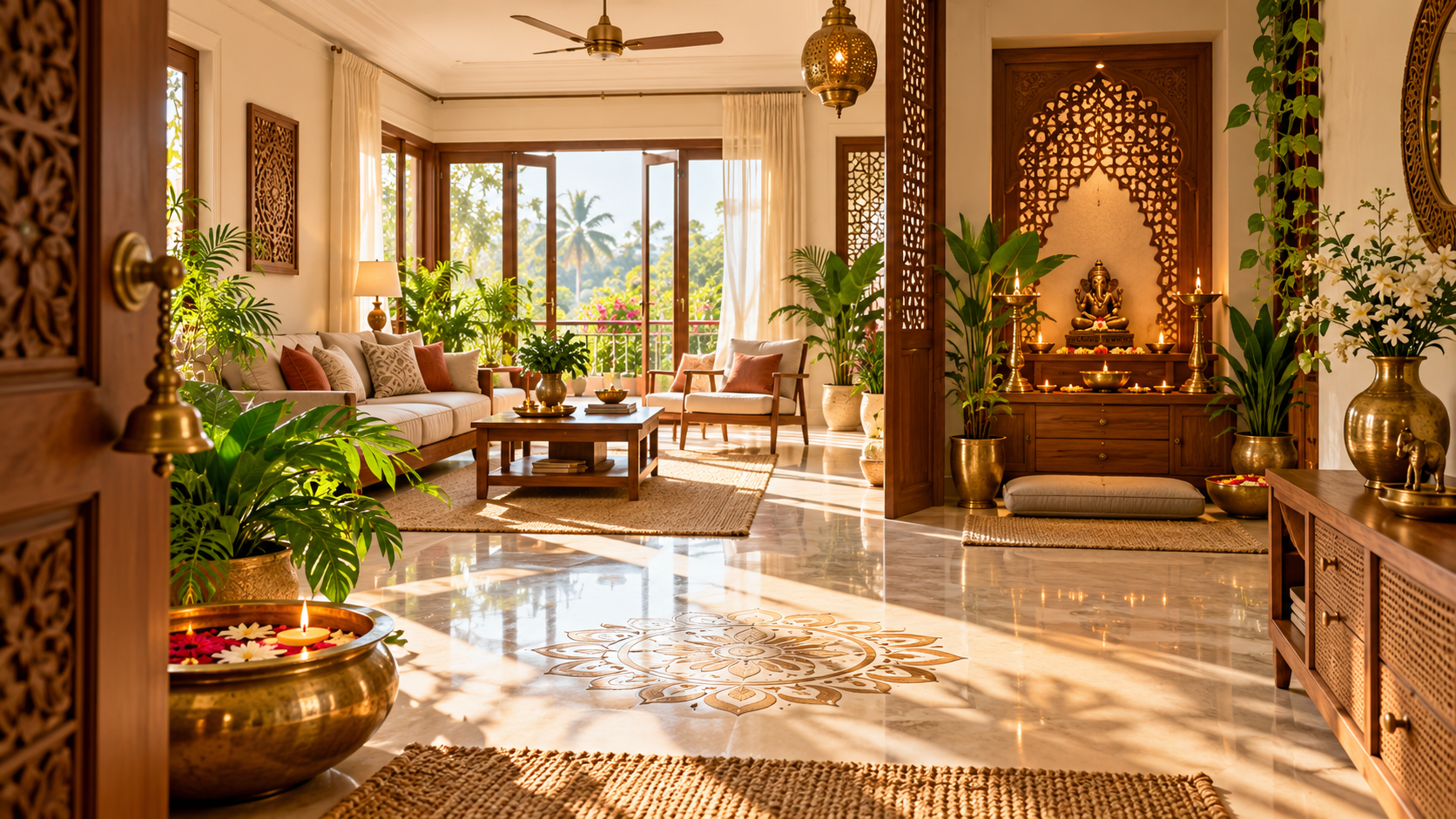
The Living Environment as a Sanctuary
Your home is more than physical walls and furniture; it is the sensory backdrop against which you recover from stress, nurture relationships, and rest your mind. In ancient Indian architectural philosophy, Vastu Shastra developed as an empirical framework uniting directional alignment, natural elements (Pancha Bhoota), and spatial balance. Stripped of sensationalized folklore, traditional Vastu is fundamentally about cultivating a living environment that supports calmness, restorative sleep, and emotional equilibrium.
The Entrance: Setting the Energetic Threshold
In Vastu philosophy, the main entrance (Simha Dwara) serves as the mouth of the home, through which life vitality and daily experience enter. A dark, cluttered, or obstructed foyer immediately triggers visual tension and mental fatigue as soon as you step inside. Ensure your entryway is clean, well-lit, and unencumbered by piles of discarded footwear, old mail, or broken items. A simple doormat, gentle illumination, and a clear pathway create an immediate psychological sensation of welcome and decompression.
Natural Light and Cross-Ventilation
Classical texts place immense emphasis on the morning sun and the movement of fresh air, particularly from the East and North. Scientifically, natural morning daylight regulates human circadian rhythms, improves mood by stimulating serotonin production, and reduces dampness. Open your curtains early in the day, air out living quarters daily, and avoid heavy, dust-trapping drapes that block gentle sunlight. An airy, brightly lit space directly alleviates feelings of stagnation and heaviness.
A harmonious home does not require knocking down walls; it begins by removing what is useless, making room for fresh air, and treating space with reverence.
The Psychological Power of Thoughtful Decluttering
One of the most practical alignments between modern environmental psychology and Vastu principles is the treatment of clutter. Every physical item in your visual field competes for your brain's attentional capacity. In Vastu, keeping the central area of the home (Brahmasthan) relatively light and unburdened fosters expansive mental clarity. Donate unused garments, clear congested hallway storage, and keep bedroom surfaces tidy to encourage restorative rest.
Creating a Calm Reflection Corner
Vastu traditionally favors the Northeast quadrant (Ishanya) for prayer, meditation, or scholarly contemplation due to its peaceful quality. Even if your apartment layout does not offer an exact compass alignment, dedicating a single, quiet corner of your dwelling exclusively to calm reflection makes a profound difference. Place a comfortable cushion, a potted green plant, a small lamp with warm lighting, and keep it free of digital screens.
Realistic Expectations: Environmental Comfort Over Superstition
It is critical to distinguish constructive environmental design from predatory superstition. Vastu does not guarantee sudden wealth, effortless health, or supernatural shields against life's natural challenges. No ethical practitioner encourages tearing down functional structures out of fear. Use Vastu principles as intuitive, elegant guidelines for order, cleanliness, and sensory harmony.
Editorial Takeaway
Peace in the home is not bought through expensive rituals; it is crafted through daily intention. When your surroundings are clean, balanced, and orderly, your mind naturally finds the peace it needs to thrive.
Mindful Living Vastu Peaceful Home