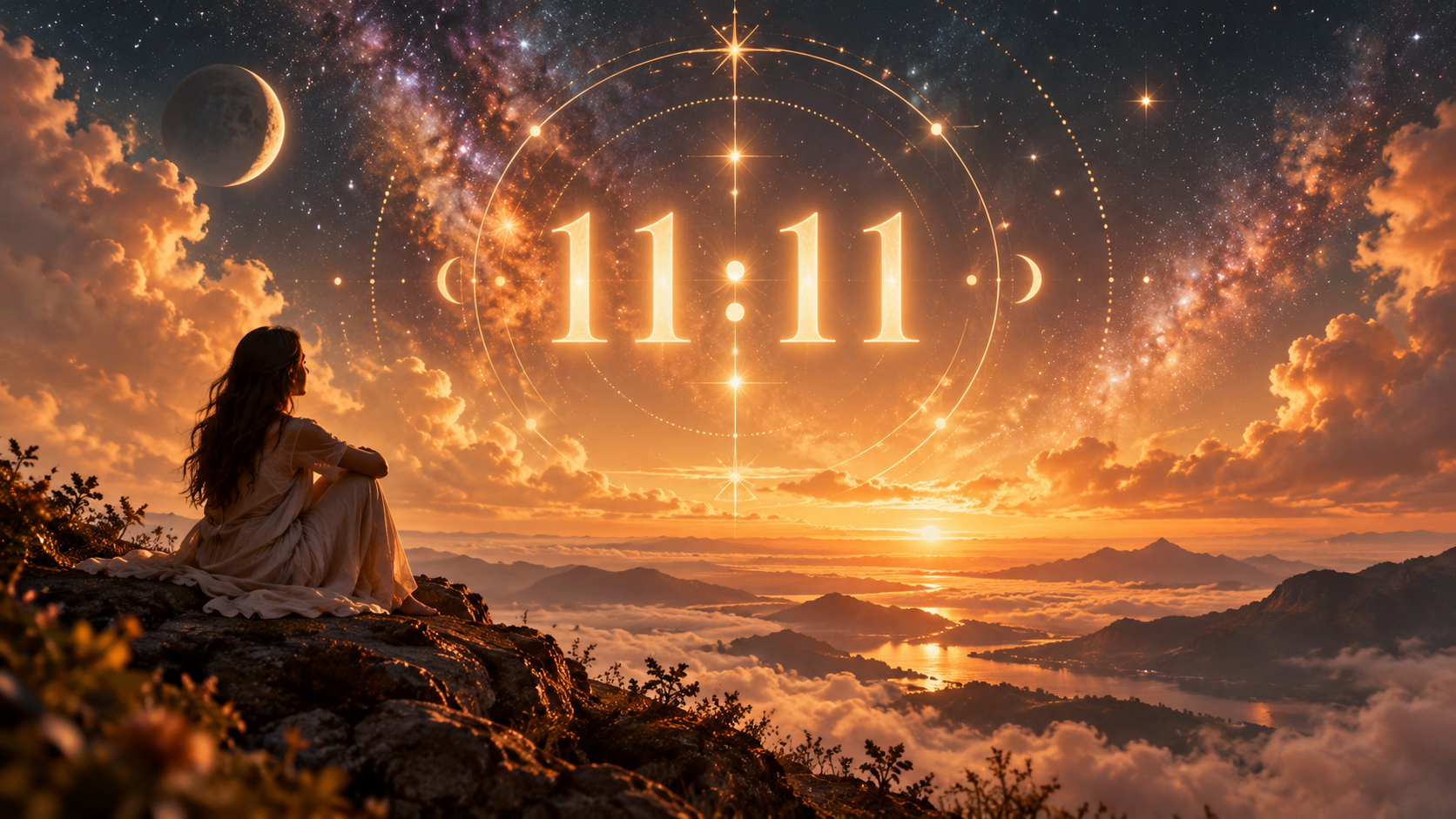
The Curiosity of Repeating Digits
You glance casually at your digital phone display, look at the dashboard of your car, or check a grocery receipt, and there it is again: 11:11. For many people across cultures and backgrounds, repeatedly noticing this specific sequence sparks an unmistakable moment of curiosity. Is it a gentle spiritual nudge from the universe, a mathematical quirk, or simply how the human brain processes time and patterns? Understanding this phenomenon requires examining both contemplative traditions and modern cognitive science.
Numerological Perspective: The Master Number 11
In traditional Western and esoteric numerology, the number 1 represents individuality, initiative, and fresh beginnings. When doubled into 11, it is classified as a Master Number—symbolizing heightened intuition, self-awareness, and visionary insight. The sequence 11:11 doubles this dynamic once more, presenting four identical pillars. Numerologists frequently interpret this visual symmetry as an invitation to pause, align one's actions with personal integrity, and focus conscious attention on what is truly important in one's life.
Synchronicity and Meaningful Coincidences
Swiss psychologist Carl Jung coined the term synchronicity to describe events that are meaningfully related, even though they lack a direct, physical cause-and-effect connection. Under this framework, noticing 11:11 at a time when you are contemplating a pivotal life decision or experiencing emotional transformation may not be an external miracle, but rather an internal bridge. The sequence acts as a symbolic mirror, reflecting your mind's readiness to pay attention to your deeper emotional and philosophical questions.
Repeating numbers do not predict the future; they offer a mindful pause to examine what thoughts and choices occupy your present moment.
The Cognitive Science Behind Pattern Recognition
From a cognitive and psychological standpoint, noticing 11:11 is closely linked to apophenia and the Baader-Meinhof phenomenon (frequency illusion). The human brain is an extraordinary pattern-recognition machine evolved to identify visual order in an unpredictable world. You look at clocks hundreds of times each day without conscious memory; seeing 10:47 or 03:22 rarely registers emotionally. However, the unique visual symmetry of four identical vertical lines stands out vividly. Once the mind flags 11:11 as intriguing, confirmation bias ensures you vividly remember every future occurrence while ignoring routine timestamps.
Practical Journaling and Reflection Exercises
Rather than treating number patterns as superstitious omens of good or bad luck, many practitioners use them as practical triggers for mindfulness. When you notice 11:11, take three deep, intentional breaths. Note in a personal journal what you were actively thinking, feeling, or working on immediately prior to seeing the digits. Are your daily routines serving your long-term values? Are you carrying avoidable mental friction? Turning a momentary glance into a deliberate reflective exercise transforms a fleeting coincidence into an active tool for self-discovery.
Approaching Number Sequences Without Fear
It is essential to approach all numerical patterns with grounded perspective and psychological balance. Number sequences carry no malevolence, impending doom, or rigid mandates. They do not force choices or guarantee outcomes. When approached with curiosity and calm inquiry rather than anxiety or superstitious dread, 11:11 simply serves as a quiet, poetic reminder that life is rich in wonder, and that our attention shapes how we experience the everyday world.
Editorial Takeaway
Whether you view 11:11 through the lens of numerological symbolism or cognitive psychology, its greatest value lies in the conscious pause it creates. In our hurried modern lives, any gentle reminder to breathe, center oneself, and choose presence over distraction is a welcome companion.
Spiritual Growth Numerology 11:11 Angel Numbers