Origins in South Asian Contemplative Traditions
The concept of chakras (literally translating to 'wheels' or 'discs' in Sanskrit) has captured global imagination over recent decades. Historically, chakras originated within classical Indian philosophical, yogic, and tantric traditions, documented in ancient texts such as the Upanishads and later medieval hatha yoga treatises. Rather than describing literal physical organs or anatomical structures, classical practitioners conceptualized chakras as focal points of vital energy (prana) used during guided meditation, breath control (pranayama), and spiritual contemplation.
The Popular Seven-Chakra Model
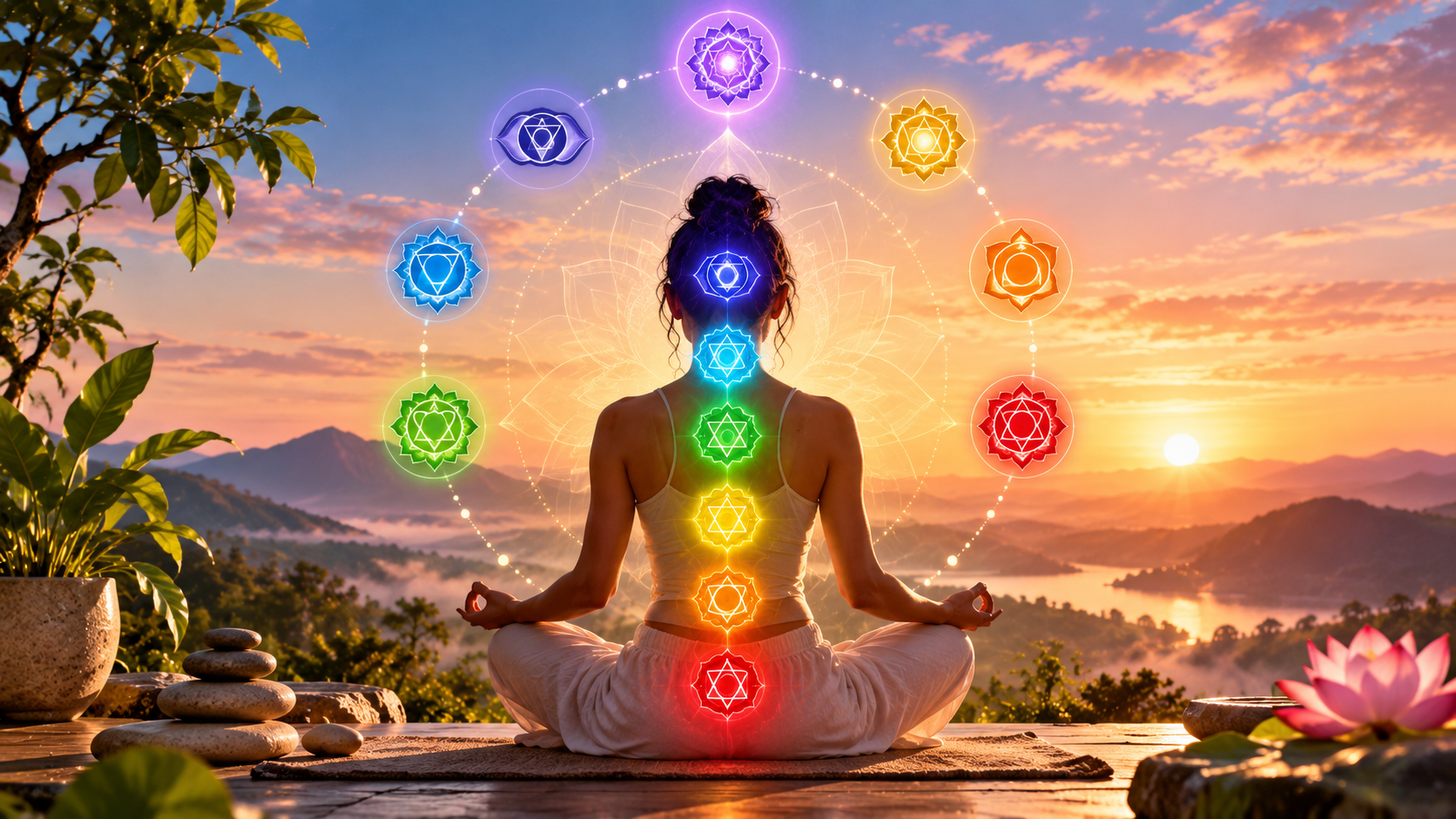
While historical traditions described various numbers of energetic centers, the seven-chakra system mapped along the central spinal column (Sushumna Nadi) is the most widespread framework in contemporary mindfulness practices. This model traces an intentional path of human experience from foundational groundedness up to transcendent awareness: Muladhara (Root), Svadhisthana (Sacral), Manipura (Solar Plexus), Anahata (Heart), Vishuddha (Throat), Ajna (Third Eye), and Sahasrara (Crown).
Symbolic Architecture of the Energy Centers
Each chakra serves as a symbolic archetype representing a distinct facet of conscious human life. The Root chakra concerns physical security, stability, and belonging. The Sacral center connects to creativity and emotional adaptability, while the Solar Plexus embodies willpower and inner confidence. The Heart chakra bridges lower instincts with higher compassion, emphasizing empathy and forgiveness. Moving upward, the Throat represents honest expression, the Third Eye embodies intuitive discernment, and the Crown reflects connection to the broader cosmos and universal consciousness.
Chakras are best understood not as physical organs to be mechanically repaired, but as a symbolic map for understanding the full spectrum of our emotional and conscious lives.
Mindful Breathwork, Posture, and Grounding
For beginners interested in exploring these ideas without dogma, chakra contemplation offers a structured framework for body-awareness meditation. Sitting with an upright, relaxed spine, one can gently bring attention to the physical areas corresponding to each center. Coupling this localized focus with deep, steady nasal breathing encourages parasympathetic nervous system activation—slowing the heart rate, easing muscular tension, and promoting deep somatic presence.
Separating Contemplative Philosophy from Medical Science
It is essential to maintain rigorous intellectual honesty regarding what chakras are and what they are not. Chakras are not biologically established anatomical organs, nerves, or endocrine glands recognized by modern medical science. Meditating on chakras cannot replace medical diagnosis, evidence-based psychotherapy, or physician-prescribed treatments for physical and mental illnesses. When respected as philosophical metaphors and contemplative meditation focal points, they enrich spiritual practice without contradicting empirical medicine.
Respectful and Balanced Exploration for Beginners
If you wish to integrate chakra reflection into your lifestyle, approach it with humility, curiosity, and cultural appreciation. Avoid commercialized promises of 'instant chakra cleansing' or costly magical guarantees. Instead, ask yourself honest reflective questions: Am I feeling grounded? Am I speaking truthfully? Am I acting with empathy? Such self-inquiry represents the true spirit of yogic introspection.
Editorial Takeaway
The chakra system offers a profound metaphorical architecture for personal growth. By integrating grounded stability, creative passion, confident action, heartfelt love, honest voice, deep wisdom, and spiritual humility, we cultivate a complete, balanced human life.
Mindfulness Chakras Spiritual Growth